何韦葶

Music Quiz: Increasing Engagement Through Multiplayer Competition
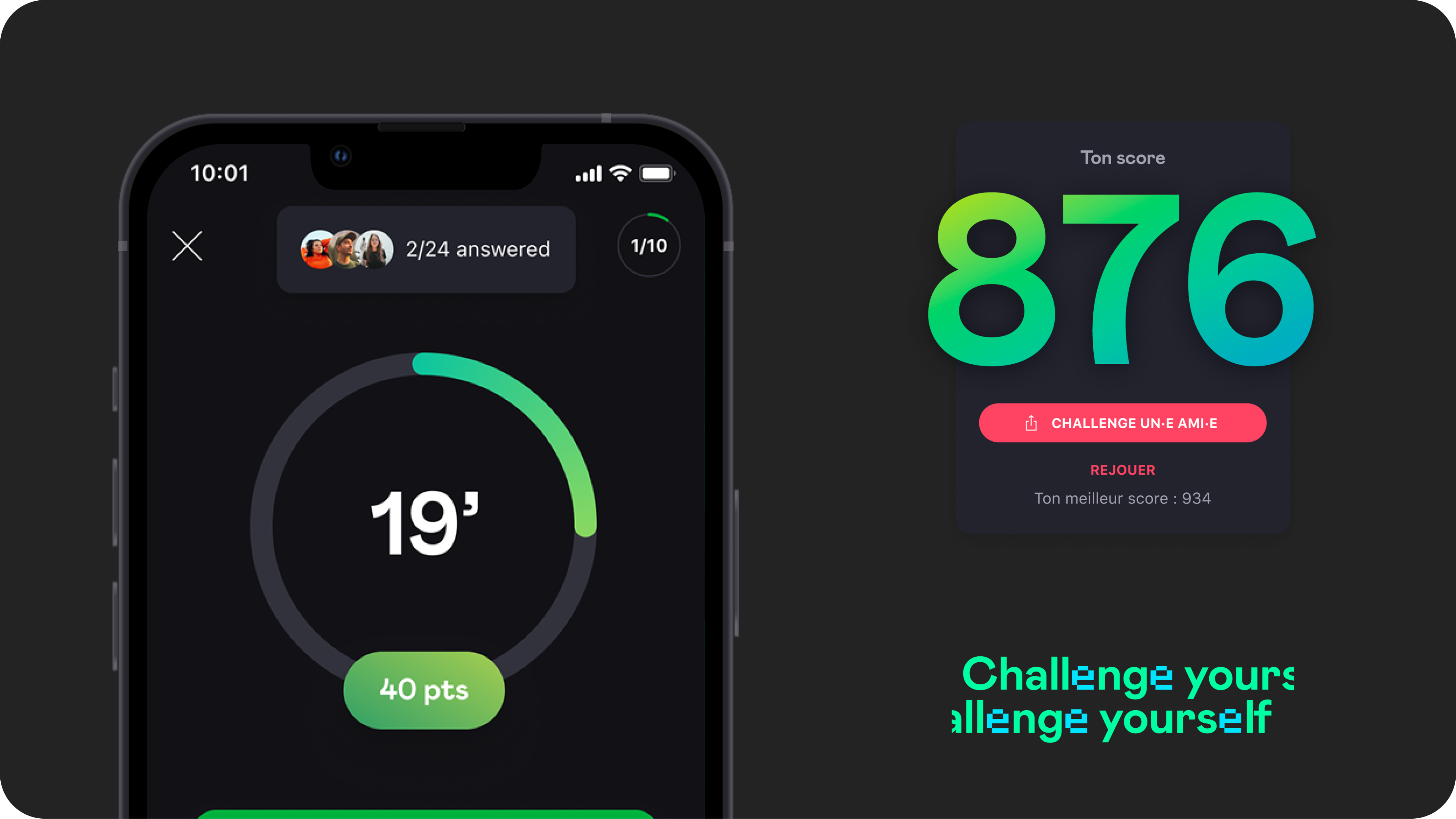
Music Quiz was designed as a lightweight trivia experience to test users’ music knowledge. While early usage was strong, engagement dropped over time as the solo experience lacked challenge and replay incentives. This project focused on introducing real-time multiplayer competition to transform Music Quiz into a more engaging, social, and repeatable experience.
Scope
Game Experience, Engagement, Retention
Team
Product, Engineering, Data
Overview
75% of users lost interest in the solo experience over time.
Usage data and user research revealed a consistent drop in engagement after a few sessions.
User survey highlighted recurring friction:
- Solo mode felt repetitive after a short time
- Lack of challenge or progression
- No way to compare performance with others
- 75% of users reported that solo mode was not engaging enough.
Quotes:
- “It’s fun at first, but it gets boring quickly.”
- “I don’t feel challenged , I don’t see myself playing again.”
These insights pointed to a motivation issue rather than a content problem.
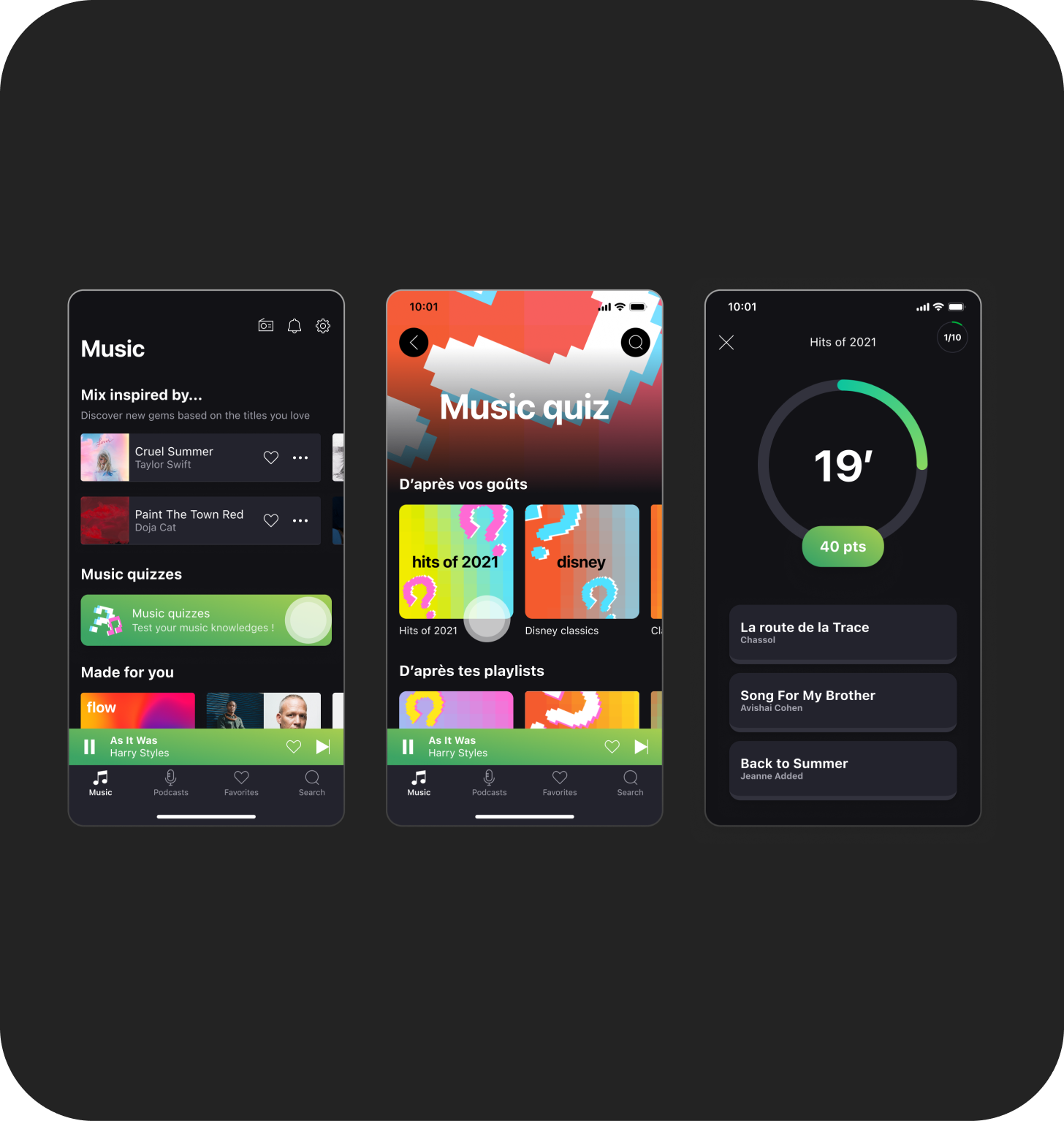
Before
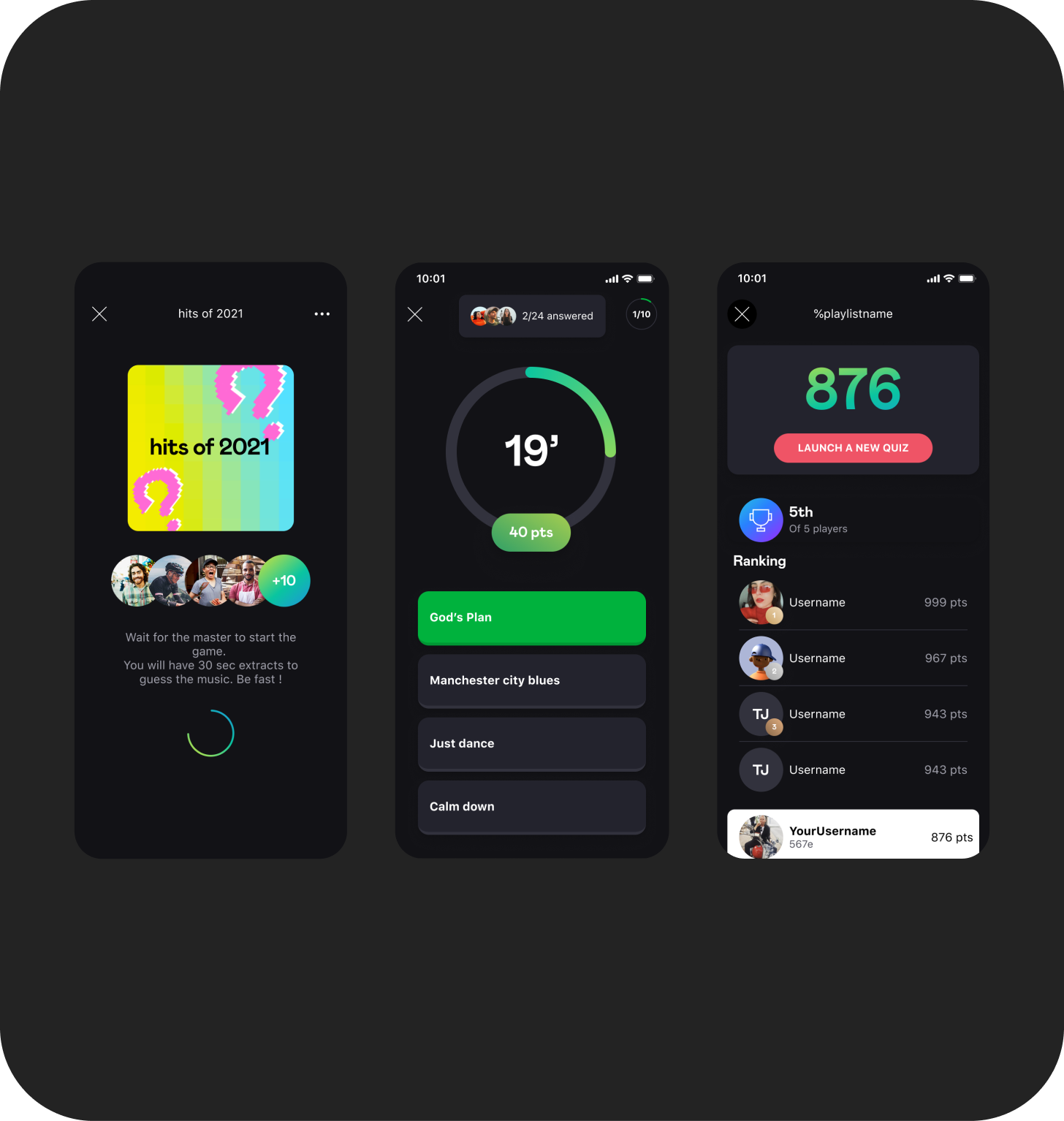
After
After
Context & Constraints
Music Quiz Felt Like a Closed Experience
While users were able to answer questions correctly, the overall experience felt quite isolating. The performance lacked any social context, and the scores did not accurately represent relative skill levels. As a result, success seemed fleeting and unimportant. Without elements of competition or comparison, users had little motivation to come back after just a few sessions.
Context
- Music Quiz was designed as a casual, accessible game
- Sessions were short and easy to start
- The experience needed to integrate smoothly within Deezer’s ecosystem
Constraints
- Tight delivery timeline
- Real-time gameplay had to remain fair despite network variability
- No complex onboarding or setup
- Maintain accessibility for casual players
Key Design Moves
Designing for a social Experience, Not Just Correct Answers
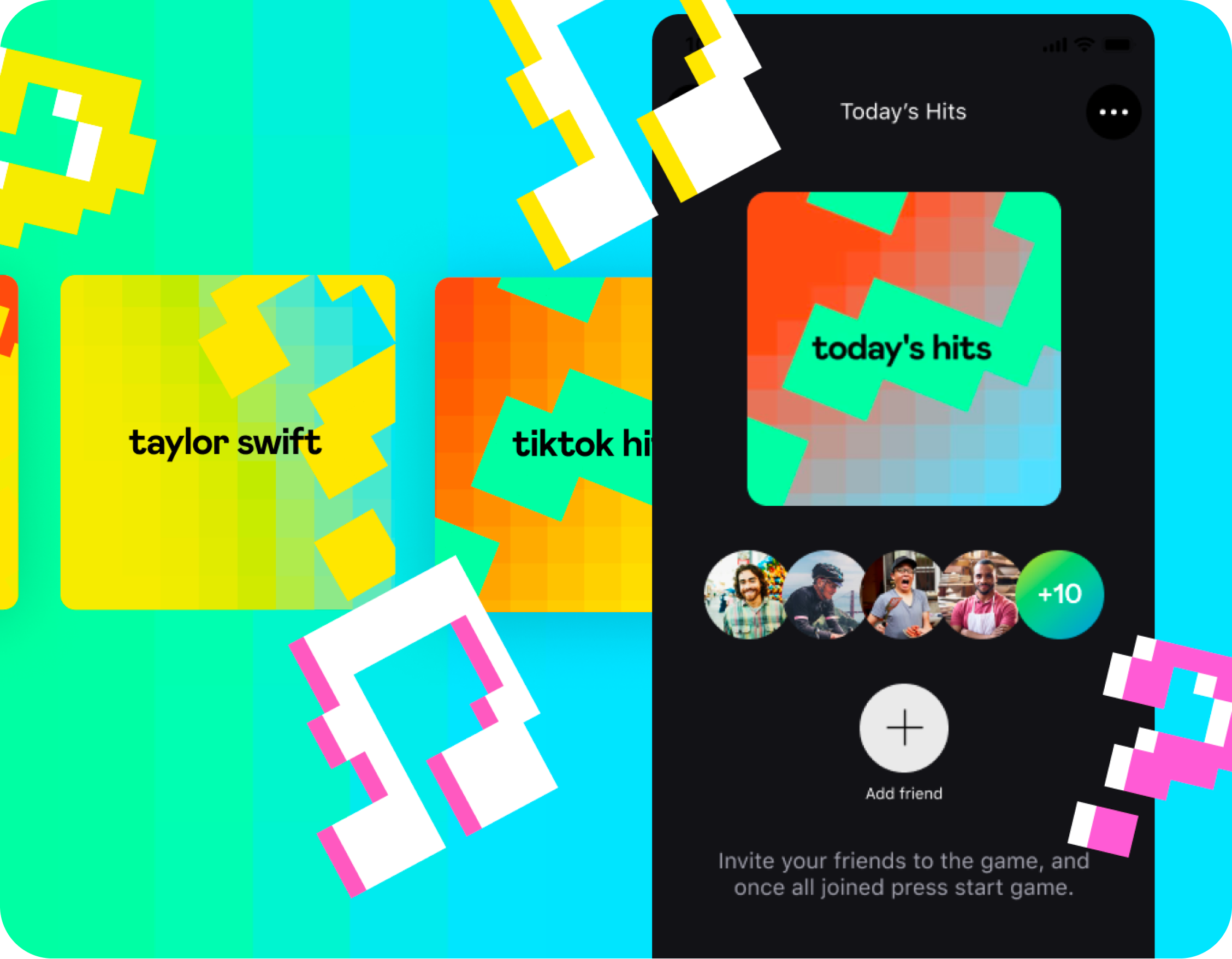
The goal wasn’t to make the quiz harder, but to make performance meaningful by introducing social comparison and real-time stakes.
- Introduce Real-Time Multiplayer to Create Immediate Stakes
Designed synchronized gameplay so players answered the same questions at the same time, making speed, accuracy, and pressure part of the challenge.
- Make Performance Visible and Comparable
Added clear score comparison (live + end-of-game recap) so users could understand who’s ahead, by how much, and why.
- Reduce Friction to Encourage Replay
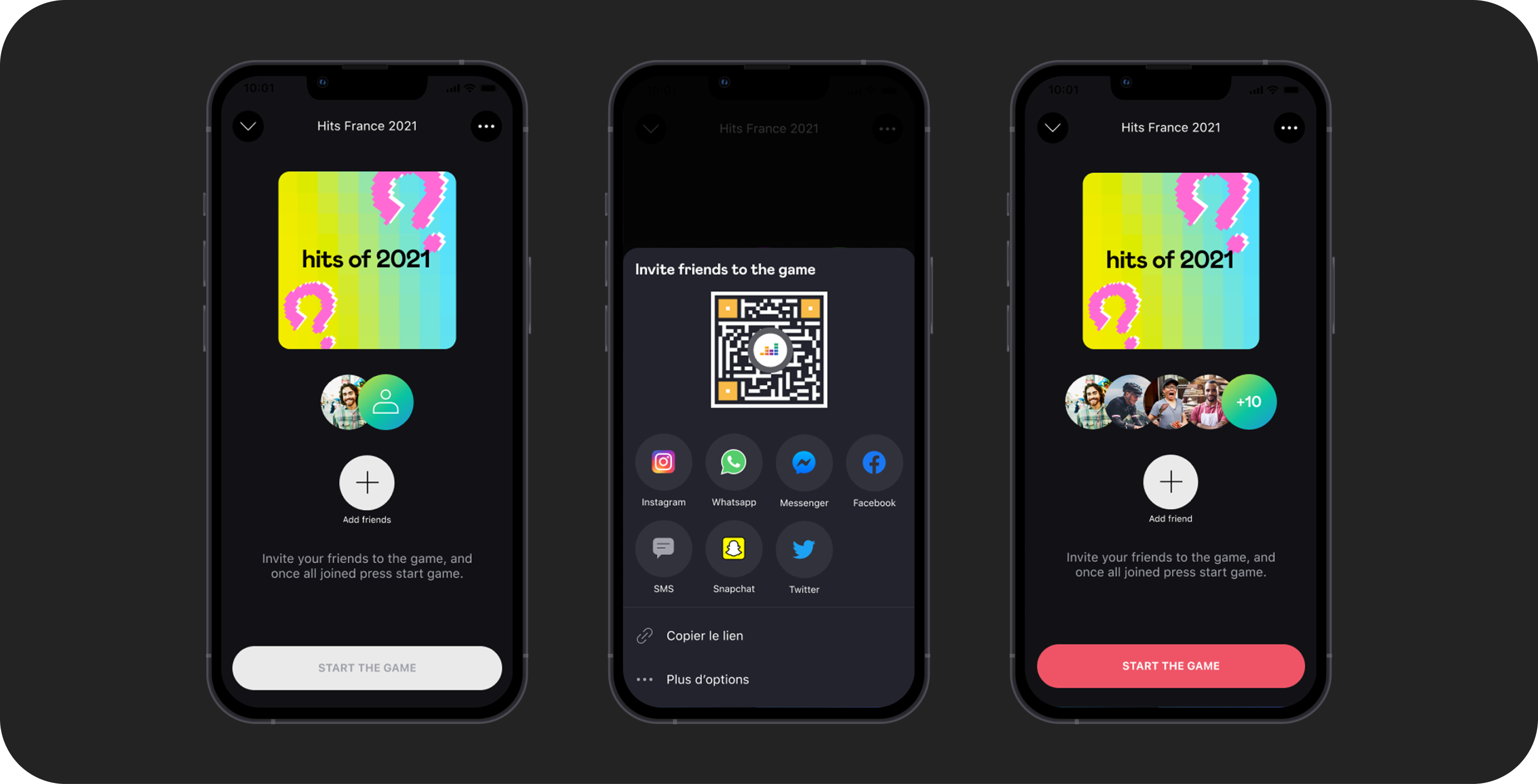
Kept rules, setup, and flows minimal (invite → play → results → rematch) to make competitive play easy and repeatable.

Outcome
A New Game Flow Built Around Competition
Postsoft launch results (30 days):
- Post-launch feedback showed stronger engagement signals:
- Increased replay driven by multiplayer challenges
- Users described the experience as more fun, competitive, and motivating
- Multiplayer sessions encouraged repeat participation within friend groups
By introducing competition, Music Quiz shifted from a short-lived solo game to a more engaging, social experience.
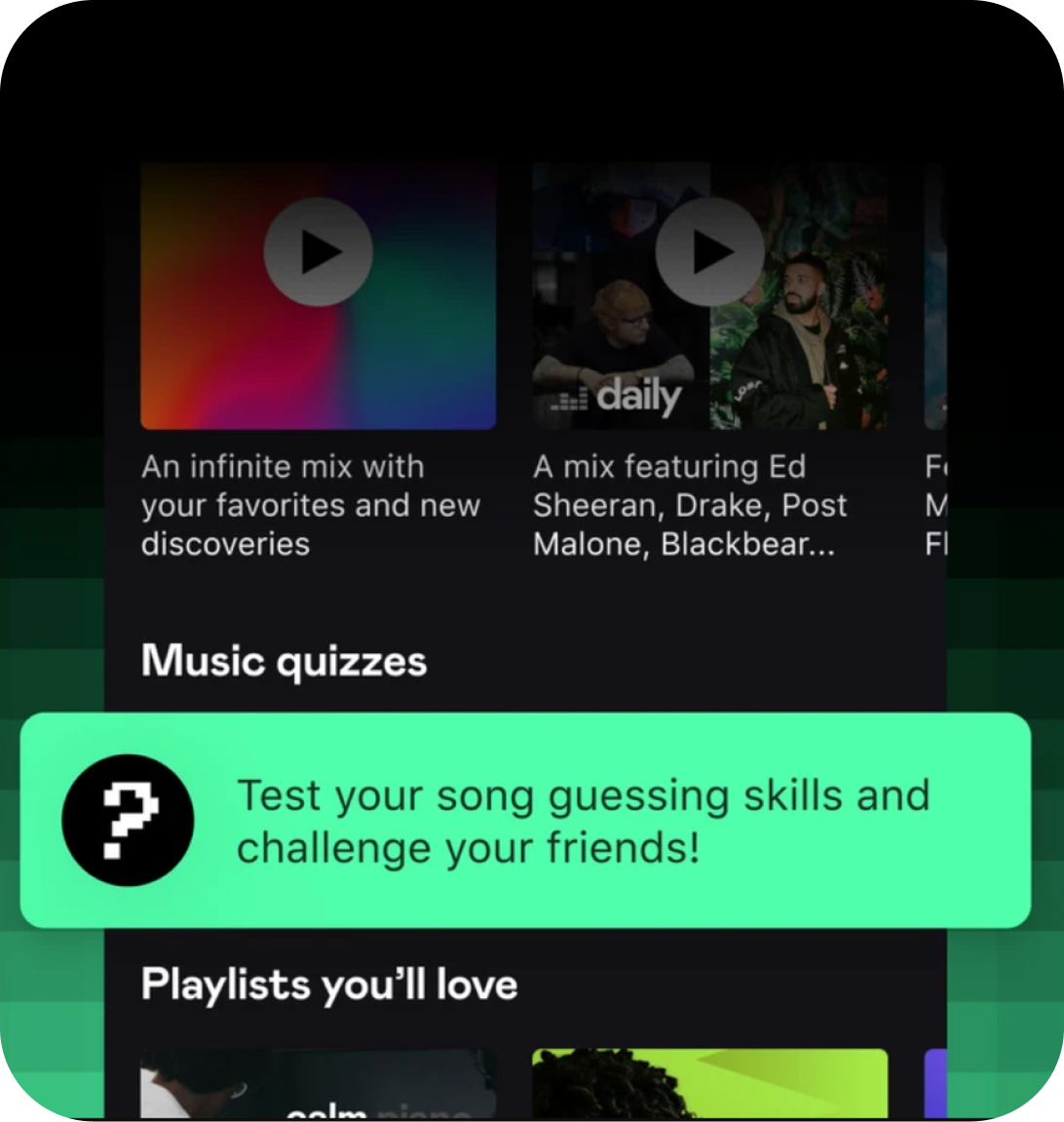
The invitation flow is designed to initiate multiplayer games effectively. It clearly defines the roles of the game creator and the guest player. Additionally, the end-of-game results focus on ranking rather than just the score. This shift in experience transforms the question from 'Did I get it right?' to 'Did I win?'.
Claire Lecerf ⓒ 2026

Get In Touch
何韦葶
Music Quiz: Increasing Engagement Through Multiplayer Competition
Music Quiz was designed as a lightweight trivia experience to test users’ music knowledge. While early usage was strong, engagement dropped over time as the solo experience lacked challenge and replay incentives. This project focused on introducing real-time multiplayer competition to transform Music Quiz into a more engaging, social, and repeatable experience.
Scope
Game Experience, Engagement, Retention
Team
Product, Engineering, Data
Overview
75% of users lost interest in the solo experience over time.
Usage data and user research revealed a consistent drop in engagement after a few sessions.
User survey highlighted recurring friction:
- Solo mode felt repetitive after a short time
- Lack of challenge or progression
- No way to compare performance with others
- 75% of users reported that solo mode was not engaging enough.
Quotes:
- “It’s fun at first, but it gets boring quickly.”
- “I don’t feel challenged , I don’t see myself playing again.”
These insights pointed to a motivation issue rather than a content problem.
Before
After
After
Context & Constraints
Music Quiz Felt Like a Closed Experience
While users were able to answer questions correctly, the overall experience felt quite isolating. The performance lacked any social context, and the scores did not accurately represent relative skill levels. As a result, success seemed fleeting and unimportant. Without elements of competition or comparison, users had little motivation to come back after just a few sessions.
Context
- Music Quiz was designed as a casual, accessible game
- Sessions were short and easy to start
- The experience needed to integrate smoothly within Deezer’s ecosystem
Constraints
- Tight delivery timeline
- Real-time gameplay had to remain fair despite network variability
- No complex onboarding or setup
- Maintain accessibility for casual players
Key Design Moves
Designing for a social Experience, Not Just Correct Answers
The goal wasn’t to make the quiz harder, but to make performance meaningful by introducing social comparison and real-time stakes.
- Introduce Real-Time Multiplayer to Create Immediate Stakes
Designed synchronized gameplay so players answered the same questions at the same time, making speed, accuracy, and pressure part of the challenge.
- Make Performance Visible and Comparable
Added clear score comparison (live + end-of-game recap) so users could understand who’s ahead, by how much, and why.
- Reduce Friction to Encourage Replay
Kept rules, setup, and flows minimal (invite → play → results → rematch) to make competitive play easy and repeatable.
Outcome
A New Game Flow Built Around Competition
Postsoft launch results (30 days):
- Post-launch feedback showed stronger engagement signals:
- Increased replay driven by multiplayer challenges
- Users described the experience as more fun, competitive, and motivating
- Multiplayer sessions encouraged repeat participation within friend groups
By introducing competition, Music Quiz shifted from a short-lived solo game to a more engaging, social experience.
The invitation flow is designed to initiate multiplayer games effectively. It clearly defines the roles of the game creator and the guest player. Additionally, the end-of-game results focus on ranking rather than just the score. This shift in experience transforms the question from 'Did I get it right?' to 'Did I win?'.
Claire Lecerf ⓒ 2026
Get In Touch
何韦葶
Music Quiz: Increasing Engagement Through Multiplayer Competition
Music Quiz was designed as a lightweight trivia experience to test users’ music knowledge. While early usage was strong, engagement dropped over time as the solo experience lacked challenge and replay incentives. This project focused on introducing real-time multiplayer competition to transform Music Quiz into a more engaging, social, and repeatable experience.
Scope
Game Experience, Engagement, Retention
Team
Product, Engineering, Data
Overview
75% of users lost interest in the solo experience over time.
Usage data and user research revealed a consistent drop in engagement after a few sessions.
User survey highlighted recurring friction:
- Solo mode felt repetitive after a short time
- Lack of challenge or progression
- No way to compare performance with others
- 75% of users reported that solo mode was not engaging enough.
Quotes:
- “It’s fun at first, but it gets boring quickly.”
- “I don’t feel challenged , I don’t see myself playing again.”
These insights pointed to a motivation issue rather than a content problem.
Before
After
After
Context & Constraints
Music Quiz Felt Like a Closed Experience
While users were able to answer questions correctly, the overall experience felt quite isolating. The performance lacked any social context, and the scores did not accurately represent relative skill levels. As a result, success seemed fleeting and unimportant. Without elements of competition or comparison, users had little motivation to come back after just a few sessions.
Context
- Music Quiz was designed as a casual, accessible game
- Sessions were short and easy to start
- The experience needed to integrate smoothly within Deezer’s ecosystem
Constraints
- Tight delivery timeline
- Real-time gameplay had to remain fair despite network variability
- No complex onboarding or setup
- Maintain accessibility for casual players
Key Design Moves
Designing for a social Experience, Not Just Correct Answers
The goal wasn’t to make the quiz harder, but to make performance meaningful by introducing social comparison and real-time stakes.
- Introduce Real-Time Multiplayer to Create Immediate Stakes
Designed synchronized gameplay so players answered the same questions at the same time, making speed, accuracy, and pressure part of the challenge.
- Make Performance Visible and Comparable
Added clear score comparison (live + end-of-game recap) so users could understand who’s ahead, by how much, and why.
- Reduce Friction to Encourage Replay
Kept rules, setup, and flows minimal (invite → play → results → rematch) to make competitive play easy and repeatable.
Outcome
A New Game Flow Built Around Competition
Postsoft launch results (30 days):
- Post-launch feedback showed stronger engagement signals:
- Increased replay driven by multiplayer challenges
- Users described the experience as more fun, competitive, and motivating
- Multiplayer sessions encouraged repeat participation within friend groups
By introducing competition, Music Quiz shifted from a short-lived solo game to a more engaging, social experience.
The invitation flow is designed to initiate multiplayer games effectively. It clearly defines the roles of the game creator and the guest player. Additionally, the end-of-game results focus on ranking rather than just the score. This shift in experience transforms the question from 'Did I get it right?' to 'Did I win?'.
Claire Lecerf ⓒ 2026
Get In Touch